I. The Weight of Numbers — What the Hun Wars Actually Cost India
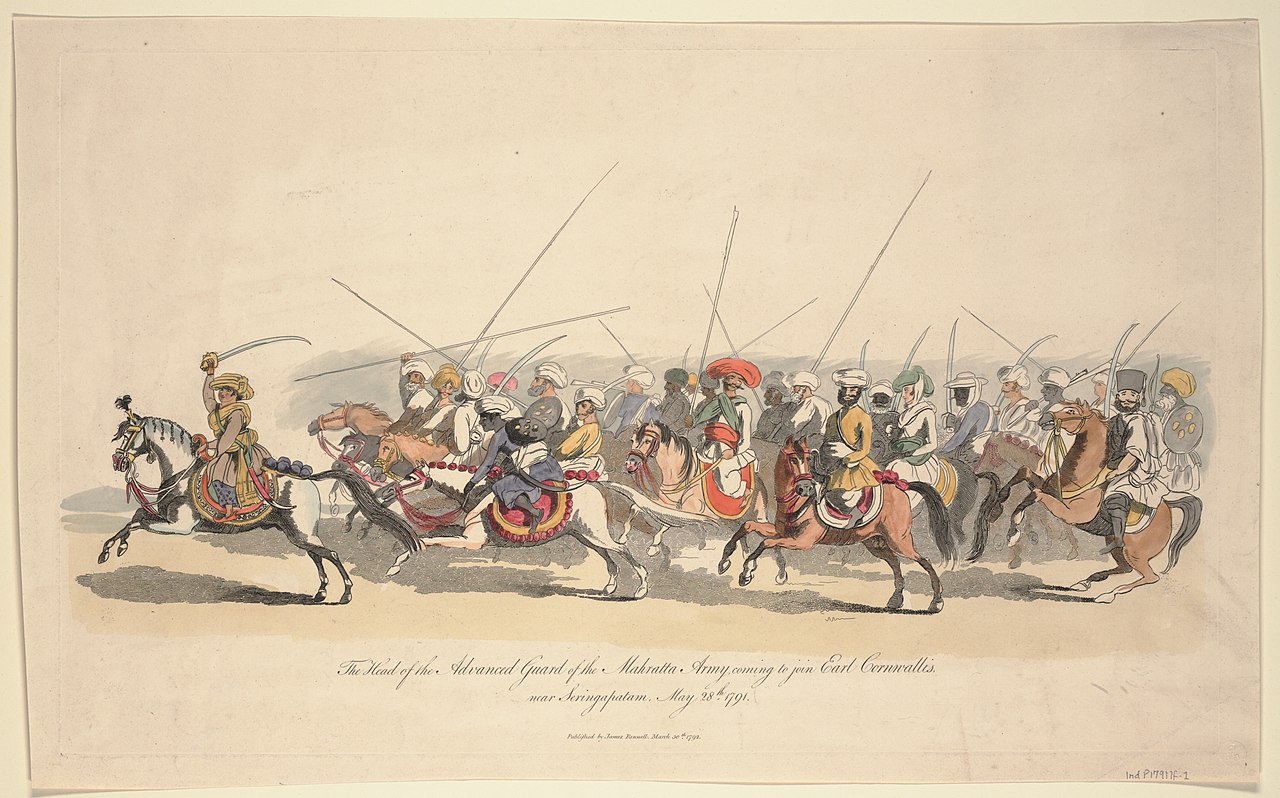
The Alchon Huns were not a single raid but a fifty-year occupation, arriving in the wake of the Kidarite Huns who had already weakened Gandhara a century before, and the destruction they left behind is measurable in ways that go beyond the battlefield itself.
Sondani and the Hun Wars — By the Numbers
These numbers understate the war's real cost. Pataliputra, the Gupta capital and one of the great cities of the ancient world, was reduced to ruin under Mihirakula's advance — a decline from which it never recovered as an imperial seat. The Gupta Empire, already weakened by earlier Hun pressure under Skandagupta a generation before, never regained its former territorial reach after Mihirakula's campaigns, and the political vacuum this created reshaped Indian history for the next two centuries.
II. Toramana's Wars — The First Hunnic Invasion
The Alchon Huns, a branch of the broader Hephthalite confederation that Byzantine sources called the White Huns, first crossed the Hindu Kush into Gandhara in the closing decades of the fifth century, establishing control over the region by roughly 465 CE. Their advance came a century after the Kidarite Huns had already tested Gupta defences, and it came against an empire in genuine decline: Skandagupta had repelled an earlier Hun thrust around 455–457 CE, an achievement significant enough that the Bhitari Pillar inscription credits him with having "shaken the earth" in subduing them near the Indus, but the victory bought only a generation's respite rather than a permanent solution.
Under Toramana, Mihirakula's father, the Alchon pushed deep into the Indian mainland, reaching as far as Eran and Kausambi in central India by the 490s and eventually establishing genuine territorial control over Malwa — a Gupta heartland province. Toramana ruled as a genuine sovereign rather than a raiding warlord, issuing his own coinage and adopting the imperial Indian title Maharajadhiraja, "great king of kings," a direct claim to the same status Gupta emperors had held.
Toramana wrested large slices of the western territories of the Guptas and established his authority as far as Central India... reducing the power of local kings and chieftains as his subordinates.
Contemporary characterisation of Toramana's conquests, based on inscriptional evidenceToramana's advance was finally checked in 515 CE, when King Prakashadharma of the Aulikara dynasty of Malwa defeated him — an engagement recorded in the Risthal stone-slab inscription, discovered only in 1983, which had for centuries left this crucial first Hunnic reversal almost entirely absent from the historical record. Toramana's forces retreated toward Punjab, and the Manjusri-mula-kalpa, a Buddhist text of the period, states that Toramana himself died at Benares while withdrawing westward. The first Hunnic war had ended in a genuine, if incomplete, Indian victory.
III. Mihirakula — The Indian Attila
Prakashadharma's victory bought less time than Skandagupta's had. Around 520 CE, Toramana's son and successor Mihirakula renewed the Hunnic advance, and where his father had ruled with something resembling conventional statecraft, Mihirakula's reign became a byword, in both Buddhist and Brahmanical sources, for calculated cruelty. The Chinese Buddhist pilgrim Song Yun recorded encountering Mihirakula's military encampment on the banks of the Jhelum in 520 CE, and by the time of his campaigns in central India, an inscription at Gwalior records him styled as "Lord of the Earth" — a claim to universal sovereignty that the Guptas themselves had once made.
Mihirakula's forces are traditionally credited with sacking Pataliputra itself, reducing the Gupta capital to ruin, and later Buddhist sources — including the seventh-century Chinese pilgrim Xuanzang, writing a century after the events and prone to some embellishment — describe a systematic campaign against Buddhist monasteries and centres of learning across the northwest, framing Mihirakula as a deliberate persecutor of the faith. Whatever the precise historical accuracy of every detail Xuanzang records, the archaeological pattern of monastery destruction in Gandhara during this period corroborates the broader picture of a genuinely devastating occupation.
By the mid-520s, Mihirakula's power extended across Punjab and into central India, and the Gupta Empire — already reduced from its earlier extent — appeared unable to mount an effective, independent response. The initiative to finally confront him would come not primarily from the Guptas, but from a regional dynasty that had already proven itself against Mihirakula's own father.
IV. Sondani — The Battle and the Coalition
Yashodharman, king of the Aulikara dynasty of Malwa and likely the son or successor of Prakashadharma, assembled a coalition of Indian rulers to confront Mihirakula directly — a coalition in which the Gupta emperor Narasimhagupta Baladitya participated, though modern scholarship increasingly suggests the Guptas played a distinctly secondary role to Yashodharman's own leadership, a notable reversal of the Gupta-centred narrative that dominated older historiography of this period.
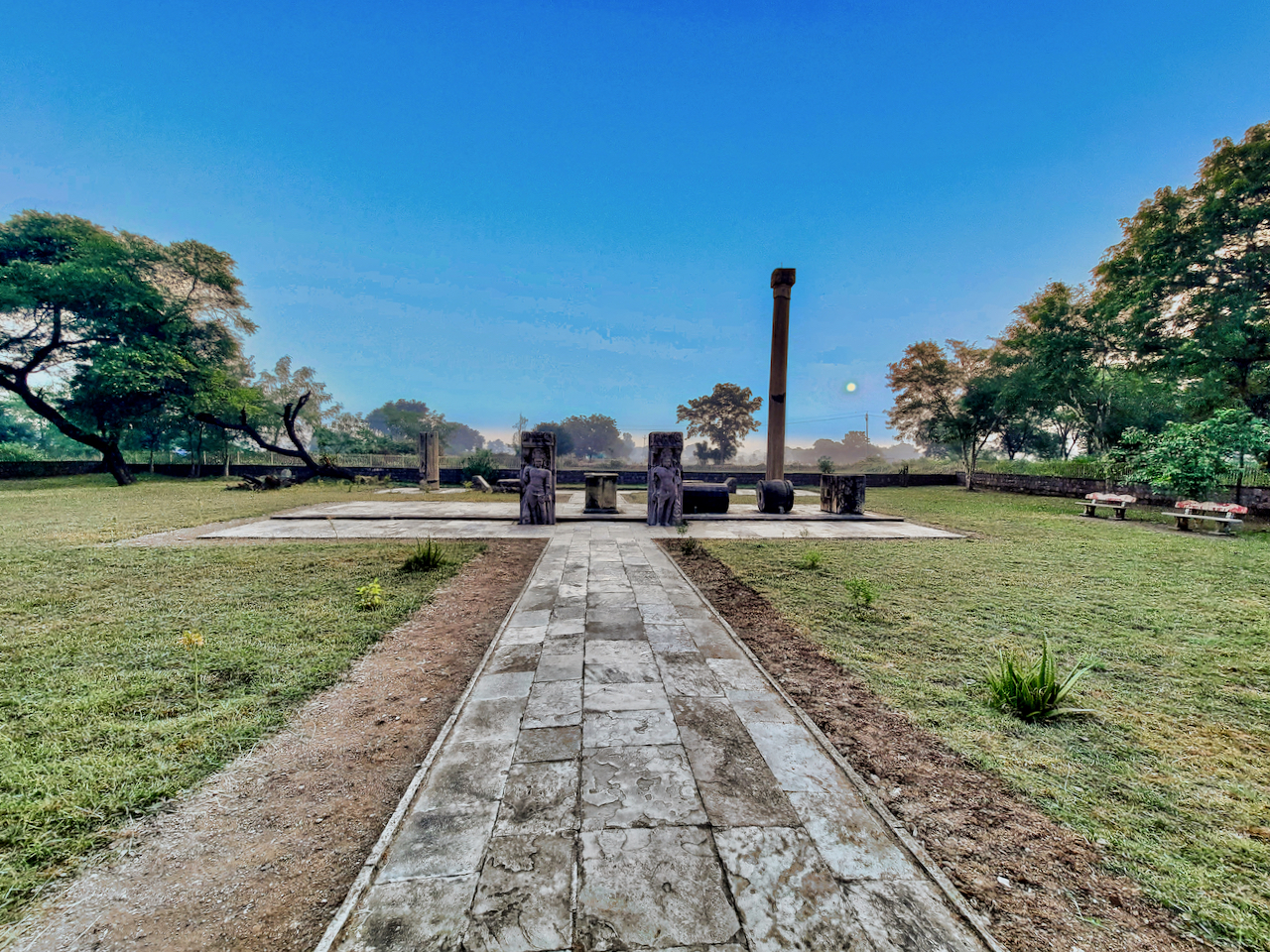
The decisive engagement came in 528 CE at Sondani, near modern Mandsaur in Madhya Pradesh. The precise tactical details of the battle itself have not survived in the historical record with the granularity modern military history would prefer — no surviving account describes troop dispositions, the sequence of engagement, or casualty figures — but the outcome is unambiguous and was commemorated immediately and permanently. Yashodharman erected a stone pillar at Sondani recording the victory in terms that leave no doubt about its significance to the victors themselves.
He to whose two feet respect was paid, with complimentary presents of the flowers from the lock of hair on the top of his head, by even that famous king Mihirakula, whose forehead was pained through being bent low down by the strength of his arm in the act of compelling obeisance.
Sondani inscription of Yashodharman, Mandsaur, 6th century CEThe inscription's language of Mihirakula's "forehead bent low" through submission is deliberately, precisely humiliating — a king once styled "Lord of the Earth" reduced, in Yashodharman's own commemorative record, to an act of physical obeisance. According to a later, more fanciful account preserved by Xuanzang, Mihirakula's life was ultimately spared at his mother's intercession, the Chinese pilgrim recording that Narasimhagupta perceived the defeated Hun king "as a man of remarkable beauty and vast wisdom" — a curious detail that, whatever its precise historicity, suggests the victors chose clemency over execution, a decision with real consequences for what followed.
V. Aftermath — Yashodharman's Empire and the Long Retreat of the Huns
Mihirakula, spared or not, retreated to Kashmir, where he is recorded eventually seizing the throne before his death around 542 CE — the point by which Alchon possessions across Punjab and northern India had been fully and finally lost. The Huns who remained resettled under Sri Pravarasena, thought to be another son of Toramana, in Gandhara and Kashmir, ruling a much-reduced domain for roughly six decades but never again posing a threat to the Indian mainland. The military and political power that had once sacked Pataliputra and claimed universal sovereignty at Gwalior had been permanently broken.
Yashodharman, for his part, used the victory to construct a genuinely imperial claim of his own. The Mandsaur pillar inscription records him asserting control over territory stretching from the Brahmaputra River in the east to the Western Ocean, and from the Himalayas to the Mahendra mountains in the south — a claim to pan-Indian sovereignty that briefly rivalled anything the Guptas themselves had achieved at their height. Yashodharman's own empire proved short-lived, fragmenting within a generation of his death, but the military achievement at Sondani outlasted his personal political project by centuries.
It is also worth noting, in any honest accounting of this period, the role played by the Maukhari dynasty under King Ishanavarman in the broader, ongoing project of containing Hunnic power in the decades that followed — a reminder that the expulsion of the Huns from India was not a single battle but a sustained, multi-generational, multi-dynastic effort, of which Sondani was the decisive turning point rather than the sole cause.
VI. The Geopolitical Consequences — Why Sondani Mattered Beyond the Battlefield
The most immediate consequence of Sondani was demographic and cultural rather than purely political: the permanent removal of a hostile power whose religious policy, however exaggerated in some later retellings, had genuinely included the destruction of Buddhist institutions across the northwest. Buddhism in Gandhara, already a religion in transition, never fully recovered its former institutional strength in the region after the Hun wars, and the balance of religious patronage in post-Gupta India tilted decisively toward the various forms of Brahmanical Hinduism that Yashodharman and his successors patronised.
Politically, Sondani marks the point at which the Gupta Empire's claim to paramountcy in northern India became permanently, irreversibly moot. The Guptas would linger in reduced form in eastern India for some decades more, but the empire that had once ruled from the Arabian Sea to Bengal was, after Mihirakula's invasions and the Sondani campaign that finally ended them, a regional power among several rather than a genuine imperial hegemon. The vacuum this created is the direct precondition for the fragmented, multipolar political landscape of early medieval India — the world of regional kingdoms, of Harsha's seventh-century attempt at reunification, and eventually of the Rajput states that would dominate northern India for centuries.
There is, finally, a longer-range strategic consequence worth stating plainly. Sondani closed the door that Central Asian steppe powers had used to enter the Indian subcontinent since the Indo-Greeks, Sakas, and Kushanas before them, and that door would not reopen for Central Asian invaders on a comparable scale until the Ghaznavid and Ghurid incursions beginning in the late tenth century — a gap of nearly four hundred and fifty years during which no foreign power originating beyond the Hindu Kush established comparable territorial control over the Indian mainland. Whatever else divides the fragmented politics of post-Gupta India from the unified grandeur of the Gupta age itself, the subcontinent's core territory remained, for over four centuries after Sondani, free of the kind of sustained foreign occupation that had defined the previous hundred years.
VII. Conclusion — A Battle the West Never Learned About
Sondani receives, in most global surveys of late antiquity, a sentence or two at most — a curious asymmetry given that it represents the decisive defeat of the same broad Hunnic phenomenon that, in its western branch under Attila, occupies chapters in every history of the fall of Rome. The Hephthalites who devastated Gandhara and sacked Pataliputra were cousins, in some genuine sense still debated by scholars, of the Huns who ravaged Gaul and forced Rome itself to buy peace. India's confrontation with this same steppe phenomenon receives, in Western historical memory, essentially no attention at all.
This is not merely an injustice of proportion. It reflects a genuine asymmetry in how the collapse of classical empires under nomadic pressure has been narrated globally — Rome's fall a foundational Western story, retold endlessly; the Gupta Empire's comparable crisis under an closely related nomadic threat, and its ultimate, successful reversal at Sondani, almost entirely absent from that same global conversation. Yashodharman's victory deserves better than a footnote. It was the moment a fifty-year foreign occupation, one that had already destroyed a great empire's capital and threatened its institutions, was permanently and decisively reversed by a coalition of regional Indian powers acting largely on their own initiative — and it purchased, for the Indian subcontinent, four and a half centuries free of comparable external conquest.
Notes & References
- Hans T. Bakker, The Alkhan: A Hunnic People in South Asia (Groningen: Barkhuis, 2020). The most comprehensive recent scholarly treatment of the Alchon Huns in India.
- Hans T. Bakker, Monuments of Hope, Gloom, and Glory in the Age of the Hunnic Wars: 50 Years That Changed India (484–534), 24th Gonda Lecture (Amsterdam, 2016). A focused study of exactly the period covered here.
- Upinder Singh, A History of Ancient and Early Medieval India: From the Stone Age to the 12th Century (Delhi: Pearson, 2008). The standard modern survey covering the Gupta-Hun wars.
- Ashvini Agrawal, Rise and Fall of the Imperial Guptas (Delhi: Motilal Banarsidass, 1989). The definitive dynastic history of the Guptas through their decline.
- The Risthal and Sondani (Mandsaur) inscriptions of Yashodharman, and the Bhitari and Junagadh inscriptions of Skandagupta — the primary epigraphic sources underlying this account.