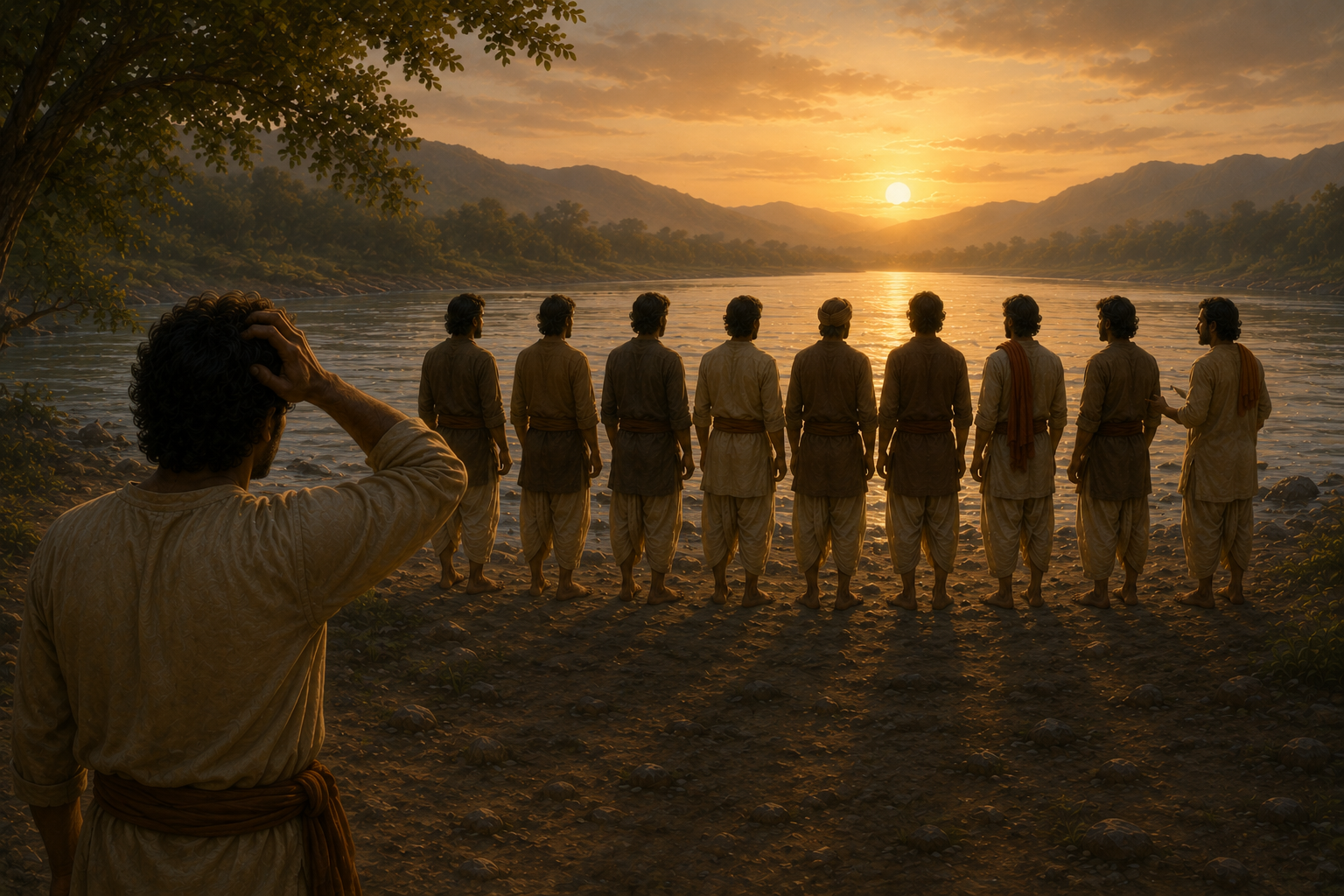
Adi Shankara makes an argument of real philosophical severity: ignorance is a cognitive error, knowledge is the only thing that can correct a cognitive error, and therefore no ritual action of any kind — however sincere, however precisely performed — can be what actually destroys it. This is not a soft preference for contemplation over ceremony. It is a metaphysical claim, argued with real rigor, that ends in a conclusion many people find genuinely unsettling once they see where it leads: liberation has, strictly speaking, nothing to do with what you do.
And yet the same Shankara treats the Vedic rites — the daily sandhyavandanam, the seasonal and occasional observances, the whole architecture of nitya-naimittika karma — as binding obligations, not suggestions, for every person who has not yet reached the rare state that would exempt them. He is remembered by tradition as the organiser of a monastic order and the founder of institutions that have spent twelve centuries since actively preserving exactly this ritual life. The same man built the strictest possible case against ritual as a cause of liberation, and among the most durable institutional structures in Indian history for making sure the rituals kept happening anyway. This essay is about how both things are true at once, and why the gap between them is smaller, and more carefully engineered, than it first appears.
Part One: The Exclusivity Claim, Stated With Full Rigor
Shankara's argument for jnana's exclusivity rests on a distinction between two fundamentally different kinds of operation. Action (karma) works by producing, modifying, or destroying an object that did not exist, or existed differently, before the action occurred. A potter's wheel produces a pot. A sacrifice, on the Purva Mimamsa account that Shankara otherwise inherits substantially intact, produces an unseen result called apurva, which eventually ripens into some worldly or heavenly fruit. This is what action does, and it is the only thing action can do: it operates entirely within the domain of origination and change.
Avidya, ignorance, is not that kind of thing. It is not an object waiting to be produced, altered, or destroyed. It is a misperception — the tradition's own preferred image is the rope mistaken for a snake in dim light — and a misperception cannot be corrected by any amount of doing. You cannot act your way out of seeing a snake where a rope is. You can only look more closely, and see correctly. Correct seeing is precisely what jnana is, and nothing about its mechanism resembles what karma does. This is why Shankara insists, across the Brahma Sutra Bhashya and his other commentaries, that jnana is not merely the best or most efficient means to liberation but the only means capable of the specific work liberation requires: removing a misperception about the nature of the self.
There is a further, sharper argument beneath this one, worth stating plainly because it does real work later in this essay. Every act of ritual karma presupposes an agent — a kartr, a doer — and a result to be enjoyed by an experiencer, a bhoktr. The entire apparatus of Vedic ritual only makes sense on the assumption that there is a real, distinct self who performs the rite and later receives its fruit. But this is exactly the assumption jnana is going to dissolve. The Upanishadic teaching that "you are Brahman," tat tvam asi, reveals that the sense of being a bounded, separate doer and enjoyer was itself the original error. Karma cannot be what removes this error, because karma's entire operation depends on the error still being in place. Ask karma to destroy the very framework it requires in order to function, and you have asked it to do something structurally impossible, not merely something it happens to be bad at.
Part Two: The Confrontation With Jnana-Karma-Samuccaya
This is not an argument Shankara made in a vacuum. It was fought, directly and by name, against the dominant intellectual establishment of his own era: the Purva Mimamsa school, whose great exponents Kumarila Bhatta and, in his early career, Mandana Mishra, held a position called jnana-karma-samuccaya — the view that ritual action and knowledge work jointly, in combination, to produce liberation. On this account, karma is not merely preparatory. It contributes directly, alongside jnana, to the actual result.
Shankara's rejection of samuccaya is not a modest disagreement about emphasis. He treats it as a category error, an attempt to yoke together two things that operate in fundamentally different registers, the way one might try to combine addition and the color blue into a single operation. If avidya is a misperception and only correct perception removes a misperception, then adding ritual action to the mix does not strengthen the correction — it simply introduces an operation irrelevant to the actual mechanism of removal. Worse, since ritual action presupposes the doer-hood that jnana is meant to dissolve, treating karma as a co-cause of liberation risks smuggling the disease into the cure.
Tradition preserves a vivid, if partly legendary, account of exactly this confrontation playing out in person. According to the biographical accounts that have come down through the centuries — details that later scholarship treats with real caution, since the earliest full narrative sources post-date Shankara by some time and blend historical memory with hagiography — Shankara travelled to the town of Mahishi to debate Mandana Mishra, at that time a formidable defender of the Mimamsa position and, by tradition, a householder rather than a renunciate. The story holds that the losing party would take up the winner's path: were Mandana defeated, he would accept sannyasa and become Shankara's disciple. The debate's judge, by this account, was Mandana's own wife, Ubhaya Bharati, herself learned enough in both traditions to arbitrate fairly. Shankara is remembered as having prevailed, and Mandana Mishra is said to have taken sannyasa and become known as Sureshvara — one of Shankara's four principal direct disciples, and, by later tradition, the first Shankaracharya of the Sringeri matha, though modern scholars note the identification of Mandana Mishra with Sureshvara is itself disputed, resting on traditional recognition rather than settled historical proof.
Whatever the precise historical texture of that meeting, the philosophical confrontation it dramatizes was entirely real, and Shankara did not soften his position to accommodate it. Sureshvara's own subsequent work, the Naishkarmyasiddhi, extends his teacher's rejection of samuccaya with real technical precision, arguing at length that ritual injunction and liberating knowledge belong to two entirely different orders of scriptural authority, and cannot be merged into a single joint cause without violating the coherence of both.
Part Three: What Karma Actually Does
None of this makes karma irrelevant, and Shankara is careful to say so, repeatedly and in detail. What karma cannot do is directly cause liberation. What it can do, and does do, in his account, is prepare the mind to be capable of receiving jnana at all — a function the tradition calls citta-shuddhi, purification of the inner instrument.
The mechanism here draws on a psychology inherited from Samkhya and Yoga: the mind's three qualities, or gunas — sattva, rajas, and tamas — govern respectively clarity, restlessness, and dullness, and a mind dominated by rajas and tamas simply cannot sustain the sequence of hearing, reasoning, and contemplation that liberating knowledge requires. Disciplined action performed without craving its fruit — nishkama karma, the teaching Shankara draws at length from the Bhagavad Gita — genuinely reduces rajas and tamas and increases sattva, producing exactly the kind of settled, steady attention capable of actually grasping "you are Brahman" rather than merely hearing the words pass by.
The classical image the tradition uses for this relationship is clouds and sun. Disciplined practice can clear away clouds, and clearing away clouds is real, valuable, necessary work — but the clearing does not create the sun. The sun, self-luminous, was shining the entire time the clouds obscured it. Seeing it requires the clouds to be gone, but seeing it is still a distinct act from the clearing itself, performed by a different faculty entirely. Karma is the weather system. Jnana is the act of vision.
This is also where Shankara's four qualifications, the sadhana chatushtaya, belong in the architecture: viveka, the discrimination between the eternal and the transient; vairagya, dispassion toward the fruits of action here and hereafter; the sixfold inner discipline of shama, dama, uparati, titiksha, shraddha, and samadhana — calm, restraint, renunciation of unnecessary activity, endurance, faith, and mental collectedness; and mumukshutva, the burning desire for liberation. Cultivating these qualifications is real, effortful work, much of it accomplished precisely through sustained, disciplined karma. None of it, on Shankara's own account, is liberation itself. All of it is what makes a mind capable, at last, of hearing the teaching correctly when a qualified teacher finally gives it.
Part Four: Vidhi and Pratyavaya — The Real Force of Obligation
It would be a serious misreading to conclude from all this that nitya karma is optional for anyone who has not yet reached liberation — a kind of helpful practice one might take up or set down according to personal inclination. Shankara does not present it this way, and the technical vocabulary he inherits from Purva Mimamsa is explicit about why.
Nitya karma carries the force of vidhi, genuine scriptural injunction, and Shankara accepts this classification largely intact even while denying that fulfilling the injunction directly produces liberation. The Mimamsakas distinguish nitya-naimittika karma — obligatory and occasional rites — from kamya karma, ritual performed to obtain a specific desired result. Kamya karma is aphala in a different sense: it produces the fruit it aims at, wealth or a son or heaven, and nothing more. Nitya karma is aphala in the more austere sense that it produces no positive fruit of its own at all. What it produces, if omitted, is pratyavaya — genuine demerit, a real negative consequence attached specifically to the failure to perform a standing duty.
This means the ordinary practitioner's relationship to sandhyavandanam and its companion observances is not calibrated by personal spiritual cost-benefit analysis. It is calibrated by duty, in something close to the sense that word carries in any serious ethical system: the obligation exists because of who and what one is, a twice-born person embedded in a Vedic dispensation, independent of whether performing it happens to feel personally rewarding on a given morning. Karma's status as a merely indirect, preparatory cause of liberation does not loosen this obligation in the slightest. It explains what the obligation is actually for, without diminishing how binding it remains for virtually everyone subject to it.
Part Five: The Narrow Gate
There is, in Shankara's system, a genuine exemption from this obligation, called vidvat-sannyasa, the renunciation appropriate to one who already knows. Someone who has actually attained brahma-jnana — direct realization, not intellectual conviction, not philosophical agreement, not even prolonged and sincere contemplative effort still short of the realization itself — is understood to have already accomplished what nitya karma was always merely preparing them for. Continuing to perform ritual action, for such a person, would mean continuing to act as though one were still the bounded doer that the realization has already, directly, seen through. Shankara marshals real textual support for this position, pointing to Upanishadic figures who renounced all ritual observance entirely, arguing directly against the Mimamsaka position, associated above all with Kumarila, that Vedic duty binds every qualified person literally until death, a-marananta, without exception.
The gate this opens, however, is narrow by design, not by accident, and it is worth being precise about exactly how narrow. The qualification is not sincerity. It is not years of practice. It is not even correct philosophical understanding of Advaita's arguments, however thoroughly reasoned. It is actual, accomplished realization — a state the tradition itself treats as rare, and treats the claim to have reached it with real suspicion when it comes cheaply or quickly.
Shankara's handling of the Isha Upanishad's second verse shows this precision in action. The verse appears, on a natural reading, to recommend performing karma for an entire hundred-year lifespan — precisely the kind of verse the Mimamsakas would read as settling the question in their favor, a lifelong sentence binding everyone without qualification. Shankara reads it instead as addressed specifically to the person who has not yet renounced the sense of personal agency — describing the appropriate path for someone still climbing toward qualification, not a universal injunction that would bind even the one who has already arrived. The verse is not softened or explained away. It is read carefully, in context, as applying to exactly the population it was actually written for.
The practical consequence is this: vidvat-sannyasa functions, for the overwhelming majority of people at any given time, not as an available option but as a confirmation that the ordinary obligation still applies to them. The gate exists. Shankara insists on it, philosophically, against real opposition. And almost no one, by his own account of what the gate actually requires, is in a position to walk through it.
Part Six: Sudden or Gradual? The Debate Within Shankara's Own School
There is a further layer of nuance worth surfacing here, one that shows the karma-jnana question was not fully settled even among Shankara's own direct successors, which is itself evidence of how seriously the tradition took the difficulty rather than papering over it with a single tidy formula.
A position called prasamkhyana-vada, associated with currents close to Mandana Mishra's own thinking even after his conversion, held that hearing the Upanishadic teaching — shravana — establishes only an intellectual, mediated cognition that one is not the doer, but that this cognition alone is not yet strong enough to actually eradicate the deeply ingrained sense "I am an agent, I act, I enjoy." What this view held was needed, beyond mere hearing, was sustained, repeated contemplation — sometimes described as continuous meditative dwelling on "I am Brahman," aham brahmasmi — functioning almost as a further discipline that must be carried out until direct experience, anubhava, actually crystallizes. On this reading, something quite like ongoing effortful practice remains necessary even after the teaching has been correctly heard and understood, right up until the moment realization actually lands.
Sureshvara's own developed position, in works like the Naishkarmyasiddhi, argues against exactly this residual role for effort, holding instead that correct hearing of a genuinely qualified teacher's words, in a mind already properly prepared by the four qualifications, produces the liberating cognition directly and immediately — that "you are Brahman" understood correctly simply is the removal of ignorance, with no further practice standing between correct understanding and the fact it reveals. On this stricter reading, prasamkhyana-vada smuggles a residual, disguised form of jnana-karma-samuccaya back in through the side door: if contemplative repetition is what finally produces the liberating cognition, then something rather like sustained practice has quietly become a co-cause after all, precisely the position Shankara spent his career arguing against.
This internal debate matters for a question that follows naturally from Shankara's strictest position in a very direct way. Even granting that jnana alone, correctly grasped, is sufficient and immediate — the tradition itself still argued at length about exactly how much preparatory and even post-hearing contemplative work is genuinely required before that correct grasping actually occurs for a given person. Nobody serious within the tradition, on either side of this internal dispute, held that a mind could simply decide to understand and be done with it. The disagreement was never about whether real, sustained effort matters. It was about precisely where, in the sequence, that effort's work ends and jnana's own, categorically different work begins.
Part Seven: What He Actually Built
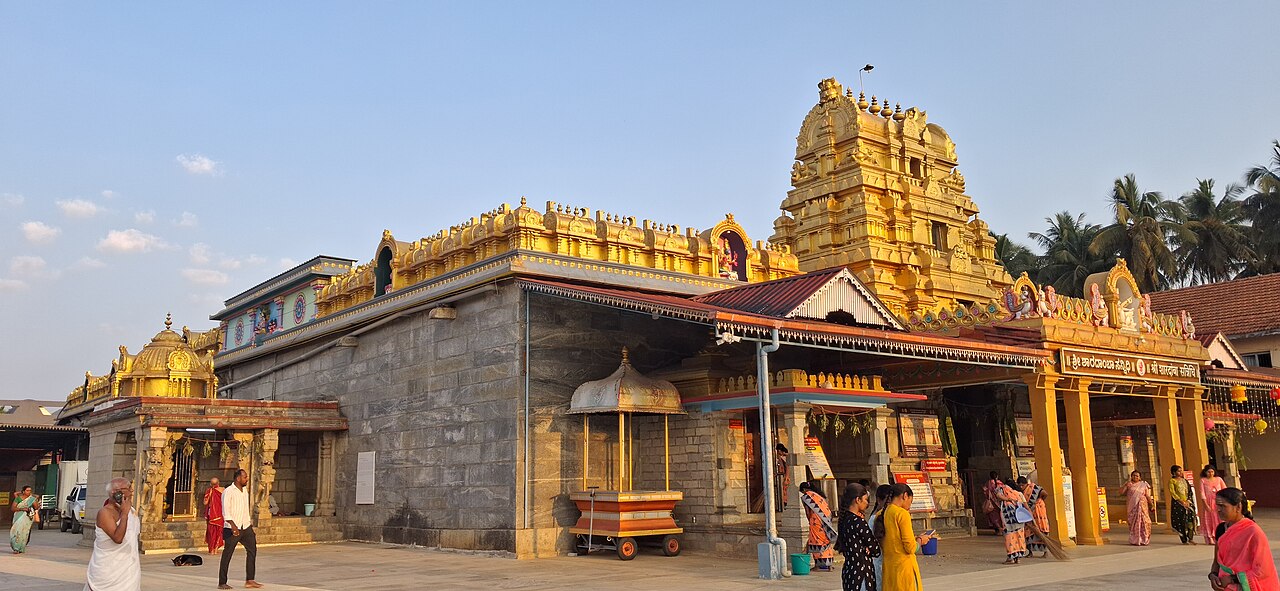
If the philosophical argument alone left any doubt about whether Shankara's system tends toward the dissolution of ritual life, the historical record he is credited with leaving behind argues rather strongly in the opposite direction. Tradition holds that Shankara organised the Dashanami monastic order and established four principal mathas at the cardinal points of the subcontinent — Sringeri in the south, Dwaraka in the west, Puri in the east, and Jyotirmath in the north, with a fifth institution at Kanchi sometimes included in the tradition, though its founding by Shankara himself is more contested than the other four. Each matha, by tradition, was entrusted to one of his four principal direct disciples — Sureshvara, Padmapada, Hastamalaka, and Totakacharya — and assigned stewardship of one Veda, a structure meant to ensure the entire Vedic corpus, ritual portions included, would be actively preserved and transmitted rather than left to informal survival.
It is worth being honest about the historical uncertainty surrounding parts of this picture. Some modern scholarship has questioned whether the four-matha system in its familiar form existed as such prior to roughly the fourteenth century, suggesting the institutional structure may have been organised, or at least formalized, considerably later than Shankara's own lifetime and then retrospectively attributed to him for legitimacy. This is a genuine scholarly debate rather than settled fact in either direction, and an honest account of Shankara's legacy should hold the institutional history a little more loosely than the more devotional biographical traditions typically do.
What is much harder to dispute is the broader pattern: the intellectual tradition that traces itself to Shankara has spent the entire span of recorded history since his death actively organising the preservation of Vedic ritual, not presiding over its abandonment. The Dashanami order itself gave institutional shape and structure to renunciation, rather than leaving it as an unregulated, individual pursuit. And Shankara is credited with a substantial devotional and liturgical corpus of his own — hymns to Devi, to Shiva, to Vishnu, compositions like the Bhaja Govindam urging its hearers toward devotion and away from mere scholastic disputation — output that sits oddly, on its surface, with the image of a thinker whose central philosophical achievement was proving that none of this ritual and devotional activity is what actually liberates anyone. Modern scholarship debates the precise authorship of individual works within this corpus with real rigor, and not everything popularly attributed to Shankara can be confidently assigned to him with certainty. But the broad shape of the attributed legacy is unmistakable, and it points toward construction, not demolition.
Part Eight: The Modern Flattening
If there is a genuine danger to ritual life lurking anywhere in this story, it is not in Shankara's own carefully graded position, read with the precision it was actually written with. It is in a much later, much looser popular shorthand that collapses his argument into something he never actually said: that because jnana alone destroys ignorance, ritual therefore does not matter, or matters only for people not yet sophisticated enough to have grasped the real teaching.
This flattening drops nearly every qualification this essay has traced. It drops the distinction between a direct and an indirect cause, treating "not the direct cause" as though it meant "irrelevant." It drops citta-shuddhi's genuine, load-bearing function, as though preparation were dispensable simply because it is not, itself, the final step. Most seriously, it drops the narrowness of vidvat-sannyasa's actual gate, letting mere philosophical conviction stand in for the realization the exemption genuinely requires — which is precisely the confusion Shankara's own handling of the Isha Upanishad verse was written to forestall. Someone who has read enough Advaita to find its arguments persuasive has not thereby met the qualification for setting ritual duty aside. They have, on Shankara's own account, simply become better prepared to eventually receive the teaching that will.
Conclusion: The Gate Almost No One Walks Through
Put the pieces back together and the apparent tension resolves into something more like a single, carefully engineered structure than a contradiction. Shankara proves, with real philosophical severity, that liberation cannot be produced by action of any kind, because ignorance is a misperception and only correct seeing removes a misperception. He then uses that same severity to make Vedic ritual obligation binding, not optional, for virtually everyone who has not yet seen correctly — because the obligation was never claiming to be the cause of liberation in the first place, only the discipline that prepares a mind capable of receiving it. And he leaves open, because the logic genuinely requires it, a narrow gate for the rare person who has actually arrived — a gate so precisely specified, and so rarely met, that its practical effect on everyone else is not liberation from the obligation but confirmation of it.
The tradition he is credited with organising took this architecture seriously enough to spend twelve centuries building institutions around keeping the rites going. That is not a philosopher's afterthought, tacked on to soften an otherwise corrosive conclusion. It is the same argument, followed all the way through.
It is worth returning, finally, to the worry that opened this whole line of questioning: that treating jnana as the sole cause of moksha might leave nothing standing to actually sustain the tradition once people take the philosophy seriously. The architecture this essay has traced suggests the worry has the direction of causation backwards. Shankara's position was never that ritual is dispensable scaffolding, destined to be kicked away the moment anyone understands the deeper teaching. It is that ritual has always had a real, necessary job — preparing a mind for a moment almost nobody actually reaches in this lifetime — and that this job remains exactly as necessary after the philosophy is understood as before, for everyone except the rare person who has already finished it. A tradition built on this architecture does not erode with correct understanding of its own deepest claims. It is, if anything, protected by that understanding, since the very rigor that proves jnana's exclusivity is the same rigor that keeps the gate narrow enough that the rites remain, for almost everyone, exactly as binding as they ever were.