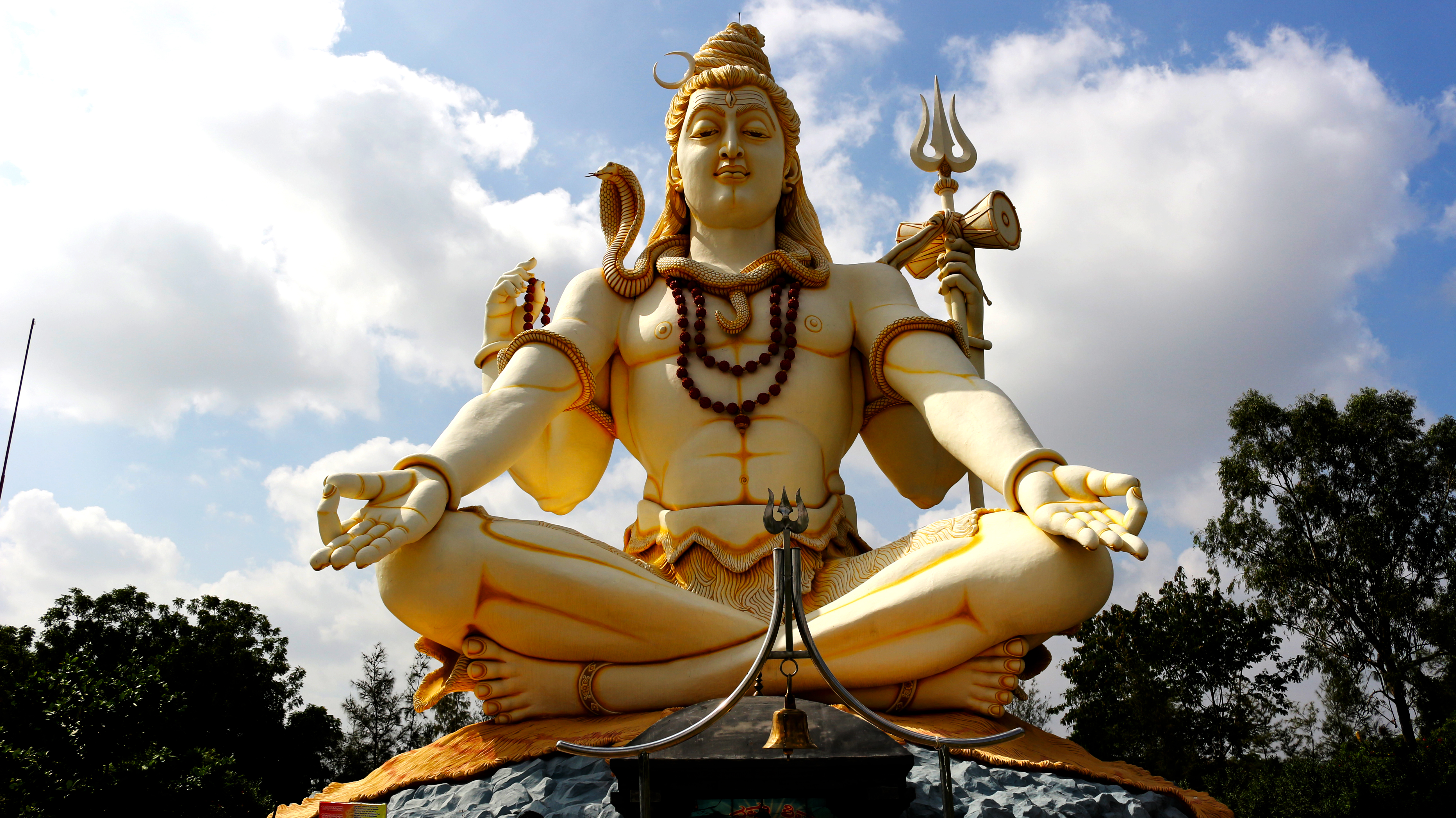
They are calling our devatas demons again. In Frisco, Texas, and in the digital spaces that radiate outward from places like it, a particular accusation has been circulating with increasing confidence: that the Hindus in their midst worship devils. That their temples are houses of darkness. That the gods on their altars — Ganesha with his elephant head, Kali with her garland of skulls, Murugan with his vel, Shiva with his third eye — are not gods at all but demons in disguise, malevolent spirits dressed up in the colourful costume of a foreign superstition.
This article is not going to explain those gods to the people making the accusation. That project — the patient, earnest, apologetic explanation of Hindu theology to a monotheist audience that has already decided what it thinks — is one I have no interest in undertaking. The explanation has been attempted for two hundred years. It has not worked. It will not work. The people who call our devatas demons are not suffering from a deficit of information. They are expressing a conviction — one rooted not in ignorance but in a specific theological framework that requires the demonisation of all other frameworks as a condition of its own coherence.
What this article is, instead, is a declaration. And it is addressed not to those making the accusation but to those of us who receive it.
The Accusation Is Not New
The specific accusation — that Hindu gods are demons — did not originate in Frisco, Texas. It originated in the missionary literature of the seventeenth, eighteenth, and nineteenth centuries, when European Christians first encountered the Hindu tradition at scale and needed a theological framework to make sense of what they found. The framework they reached for was the one they had: the biblical distinction between the one true God and the false gods of the pagans, who were understood not as fictional or mythological but as real — real demonic presences masquerading as divinities in order to lead souls away from salvation.
This was not a fringe position. It was the mainstream theological interpretation of Hinduism among missionaries and colonial administrators across three centuries of engagement. The gods were real. They were demonic. Worshipping them was not merely error but spiritual peril. The Hindu needed to be saved not just from ignorance but from active demonic captivity.
What has changed in Frisco, Texas, is not the theological content of the accusation. What has changed is its social location. It is no longer coming primarily from European missionaries on a civilising mission. It is coming from American Christians — some of them recent converts to an evangelical tradition that carries the same missionary theological DNA — who have encountered a Hindu community that is economically successful, culturally visible, and religiously unapologetic. The combination is, evidently, intolerable.
The economic accusation — that Indians are taking jobs — and the religious accusation — that Indians are worshipping demons — are not separate grievances that happen to coincide. They are two expressions of the same underlying conviction: that these people do not belong here. The economic argument provides the secular language. The religious argument provides the deeper structure. You cannot fully belong in a Christian nation if your gods are demons. Your success is therefore not legitimate. Your presence is therefore not welcome.
The Ones Whose Gods Were Already Killed
There is a dimension of what is happening in Frisco that I find not enraging but genuinely heartbreaking. And it requires care to name — because it is not an accusation against a community but a grief about what was done to one.
Some of the voices calling Hindu devatas demons belong to people of African descent. I want to sit with that for a moment before saying anything else about it, because the history it invokes deserves more than a quick rhetorical point.
The ancestors of African Americans were brought to this continent in chains. Everything was taken from them — their names, their languages, their family structures, their freedom. And among the things taken, systematically and deliberately, was their relationship with their gods. The Orishas of the Yoruba tradition. The Lwa of Haitian Vodou. The ancestral spirits of hundreds of distinct African religious traditions. These were not primitive superstitions or cultural curiosities. They were living relationships with divine presences — relationships as ancient, as theologically sophisticated, and as spiritually sustaining as anything in the Hindu tradition.
The mechanism by which those relationships were severed was precisely the same mechanism now being aimed at Hindu devatas: the declaration that these presences were not gods but demons. The slave master's Christianity identified African religious practice as devil worship, as sorcery, as spiritual darkness that needed to be replaced by the light of the Gospel. This was not merely religious intolerance. It was a weapon of total cultural destruction — because a people stripped of their gods is a people stripped of a fundamental dimension of their identity, their history, and their resistance.
"The same theological weapon that destroyed African traditional religion is now being aimed at Hindu temples in Texas. The irony is almost too painful to name. Almost."
The same theological weapon that destroyed African traditional religion is now being aimed at Hindu temples in Texas. The irony is almost too painful to name. Almost.
I do not say this in anger at the African American Christians who participate in the accusation. I say it in grief — grief for what was taken from their ancestors by the very tradition they now carry. Their old gods are weeping somewhere. Not because their descendants chose Christianity — that choice deserves respect, as all genuine faith choices do. But because the choice was not always free. Because the gods were not retired. They were beaten out. And the theological instrument used to beat them out is the same one now being directed at Ganesha and Shiva and Murugan in the suburbs of Dallas.
That history does not excuse the accusation. It contextualises it. And the contextualisation is itself a form of solidarity — an acknowledgment that what is being done to Hindu Americans now is part of a much longer story of what monotheist civilising projects do to the old gods wherever they find them.
What the Monotheist Project Does to the Old Gods
This is worth stating plainly, because it is the pattern that connects Frisco, Texas to the slave plantations of the American South to the missionary stations of colonial India to the forced conversions of pre-Christian Europe.
The monotheist project — in its Abrahamic forms — has a consistent relationship with the old gods of every tradition it encounters. It does not simply disagree with them. It cannot afford to simply disagree, because the theological structure of exclusive monotheism requires that its God be not merely the best god but the only God — which means all other claimed divinities must be either nothing at all or something actively sinister. The old gods cannot be left as simply mistaken. They must be demonised. Literally.
This is what happened to the gods of pre-Christian Europe — Odin and Thor and the Celtic pantheon did not retire gracefully into mythology. They were recast as demons, their sacred sites were built over with churches, their festivals were absorbed and renamed, and their worshippers were given the choice between conversion and death. The same happened to the Aztec gods, the Maya gods, the gods of the Inca. The same happened to the Orishas and the Lwa. The same happened, in more genteel colonial form, to the devatas of the Hindu tradition.
What is happening in Frisco is not a new phenomenon. It is the oldest phenomenon of the monotheist encounter with religious plurality — the reflex demonisation of the other's sacred. And it will not stop because we explain our theology more carefully, or build more interfaith bridges, or demonstrate our civic contributions, or achieve more professional success. It will not stop because it is not a misunderstanding. It is a theological conviction, and theological convictions of this kind are not amenable to correction by evidence.
The Declaration
So here is what I want to say — not to the accusers but to the accused. To every Hindu in Frisco and in the diaspora who has heard their devatas called demons and felt the particular shame of that accusation, the particular loneliness of having the most sacred thing in your life publicly declared evil.
They are not demons. They were never demons. The accusation does not touch them. It touches only the poverty of imagination of those who make it.
Ganesha — the elephant-headed remover of obstacles, the lord of beginnings, the god of writers and scholars and travellers — is not a demon. He is one of the most beloved presences in the history of human religious imagination. His iconography alone — the pot belly, the broken tusk, the mouse at his feet — encodes a theology of humility, of cosmic playfulness, of the sacred made approachable. The child who places a flower at his feet in a Texas suburb is not performing devil worship. She is participating in a living tradition of devotion that is older than the religion making the accusation.
Kali — fierce, dark, garlanded with skulls, standing on the prostrate form of Shiva — is not a demon. She is the face of time, of death, of the dissolution that makes room for new creation. Her terror is the terror of ultimate reality confronted without the comfortable filters of domesticated theology. She is what the cosmos actually looks like when you remove the reassuring stories we tell ourselves about divine benevolence. She is also — and this is what her devotees have always known — a mother. The most unconditionally loving presence in the Shakta tradition. The goddess who comes to you in your darkest moment not with consolation but with truth. To call her a demon is to reveal not her darkness but your own incapacity for genuine encounter with the sacred.
Murugan — the young god of the Tamil tradition, the warrior with his vel, the god of mountains and of the young — is not a demon. He is the deity before whom Tamil mothers have placed their children for thousands of years, asking for protection, for blessing, for the courage that youth requires. His worship is one of the oldest continuous religious traditions in the world. To call him a demon is to declare two thousand years of Tamil devotion a satanic error. The declaration says nothing about Murugan. It says everything about the tradition making it.
On Deportation, Imprisonment, and Non-Negotiable Loyalty
Let me be direct about something that the current political climate in America makes relevant.
There are people in this country who would prefer that I leave. Some of them would prefer it legally — through the revocation of status, through the tightening of immigration policy, through the creation of an environment sufficiently hostile that departure becomes the path of least resistance. Some of them would prefer it through means that stop short of legality but exceed it in menace — the social pressure, the economic exclusion, the public declaration that my presence is unwelcome and my gods are evil.
I want to address the premise of this preference directly. My loyalty to my devatas is not contingent on American hospitality. It is not a lifestyle choice I have made in the context of a favourable social environment that I will revise when the environment becomes less favourable. It is not negotiable. It has no price. It is not the kind of thing that responds to threat.
If I am deported, I will worship my devatas wherever I land. If I am imprisoned — an outcome that the current political imagination of certain quarters seems to regard as available — I will worship my devatas in prison. If the social cost of maintaining my practice becomes so high that it affects my professional life, my social relationships, my standing in the community, I will pay that cost and worship my devatas anyway. This is not heroism. It is simply the nature of genuine religious conviction. The devatas are not a preference. They are a relationship — one that began before I was born, that was transmitted to me by my parents and their parents, that connects me to a civilisation thirty centuries deep. That relationship does not terminate because the political weather changes.
"My loyalty to my devatas is not contingent on American hospitality. It is not negotiable. It has no price. It is not the kind of thing that responds to threat."
This is, I think, what the accusers find most incomprehensible and most threatening. They can imagine a Hindu who practices quietly, apologetically, privately — who keeps his gods safely indoors and does not trouble the public square with their presence. They can accommodate the Hindu who explains his religion in terms that make it sound like a variation on monotheism, who assures his neighbours that we really all believe in the same God. They can tolerate the Hindu who, under sufficient pressure, gradually attenuates his practice until it becomes culturally invisible.
What they cannot accommodate is the Hindu who is simply unapologetic. Who builds a temple in the suburb and places Ganesha at the entrance and does not feel the need to explain or justify or translate. Who names his gods by their names and does not reach for the monotheist vocabulary that would make them acceptable. Who meets the accusation of devil worship not with wounded protestation but with something closer to indifference — because the accusation, however sincerely felt, is simply not relevant to his relationship with his devatas.
What Survives
The Hindu tradition has been here before. Not in Texas, but in the position of having its gods declared evil by a power that intended to do something about it.
The medieval Islamic invasions destroyed thousands of temples. The colonial British project suppressed Hindu practice in more subtle but persistent ways — through law, through education, through the systematic construction of a discourse in which Hinduism was primitive, its gods were idols, and its sophisticated philosophical tradition was either ignored or condescended to. The missionary enterprise worked for two centuries to convert, deracinate, and shame. None of it killed the gods.
Ganesha is still at the entrance of every new beginning. Shiva still dances at Chidambaram. Murugan's vel still stands at Palani. Kali still receives her flowers in Kolkata and in the diaspora temples of New Jersey and California and Texas. The devatas survived the Mughal period. They survived colonialism. They survived the partition that tore the subcontinent apart. They survived the secularist project of post-independence India that tried to relegate them to the status of cultural heritage rather than living presence.
They will survive Frisco, Texas.
Not because the Hindu community is powerful enough to resist — though it is, and the political awakening of the Hindu diaspora in America is a development that deserves its own analysis. But because the gods themselves are not dependent on favourable conditions for their survival. They survive because they are real to those who worship them. Because the relationship between a devotee and his devata does not require social approval to sustain itself. Because the child who places a flower at Ganesha's feet in a temple in Frisco is not performing a political act or making a cultural statement. She is doing what her grandmother did, and her grandmother's grandmother — participating in a living relationship with a presence that has been receiving those flowers for three thousand years and is not troubled by the opinions of those who call it demonic.
To the Diaspora
I want to close by addressing the Hindu diaspora directly — specifically those who are young, who were born here or came young, who have grown up navigating the particular exhaustion of being both fully American and fully Hindu in a cultural environment that has not always known what to do with that combination.
You do not owe anyone an explanation of your gods. You do not owe anyone a translation of your practice into terms they find acceptable. You do not owe the accusers a patient tutorial on the difference between polytheism and devil worship, or a careful philosophical account of why Nirguna Brahman and the Saguna devatas are not contradictory, or a reassurance that Hinduism is really monotheistic at its core if you understand it correctly.
You owe your devatas your loyalty. You owe your tradition your practice. You owe your ancestors the continuation of a thread they maintained under conditions far more difficult than anything being faced in Texas in 2026.
The gods they couldn't kill — through colonial law, through missionary pressure, through the systematic dismantling of Hindu institutions, through the shame that was applied to every visible expression of Hindu practice — do not need to be defended. They need to be worshipped. In the open. Without apology. In Frisco and in every other suburb where a Hindu family has built a home and brought their devatas with them.
Place the flowers. Light the lamp. Say the names. The accusation dissolves in the presence of genuine devotion. It always has. It always will.
The gods survived. They are here. Worship them.
