The gods of Egypt are in museums. The gods of Greece are in mythology courses. The gods of Rome are in fantasy novels and the names of planets. The gods of the Aztecs, the Maya, the Inca — gone, surviving only in the scholarship of the people who destroyed them. The Orishas of West Africa live on, but in fragments, in diaspora, stripped of the living civilisational context that once sustained them, preserved through the heroic stubbornness of enslaved people who had everything else taken from them.
And then there is Hinduism.
Ganesha is worshipped today. Not studied, not commemorated, not reconstructed from archaeological evidence — worshipped. In living temples, by living communities, with flowers placed at his feet this morning and every morning, in a continuity of devotion that runs unbroken for three thousand years. Shiva dances at Chidambaram. The Kaveri is sacred. The Vedas are chanted. The fire altar burns. Children are given the sacred thread. Grandmothers teach slokas. The tradition breathes.
This should not be possible. By every historical precedent, it should not be possible. Hindu civilisation faced everything that killed every other ancient religious tradition — sustained military conquest, systematic temple destruction, colonial dismemberment, missionary assault, and a century of internal modernist shame that tried to finish what the invaders started. And yet.
This essay is an attempt to understand how. Not as a triumphalist exercise — the survival was purchased at enormous cost, by people who paid prices they had no choice about — but as a genuine act of historical inquiry. Because the answer to how Hindu civilisation survived is also, necessarily, an answer to what Hindu civilisation is. And that answer is one that every Hindu alive today has inherited and is responsible for.
The Graveyard of Gods
To understand what Hindu survival means, you have to understand what normally happens.
The ancient Egyptian religious tradition — one of the most sophisticated, richly elaborated, and deeply rooted civilisational traditions in human history — did not survive the combination of Roman conquest and Christian conversion. The temples were closed. The priests died or converted. The hieroglyphic script became unreadable. The gods — Ra, Osiris, Isis, Horus, Thoth, Anubis — became the subject of scholarly fascination and popular mythology, but ceased to be worshipped in living continuity with their ancient tradition. The last hieroglyphic inscription was carved in 394 CE. Within a generation of that date, the tradition was effectively dead. Fifteen hundred years of continuous Egyptian religious practice ended in a few centuries of sustained Roman-Christian pressure.
The Greek tradition — the Olympians, the mystery cults, the philosophical schools that had shaped the entire intellectual tradition of the Mediterranean world — was similarly dismantled. The oracle at Delphi, which had functioned for nearly a thousand years, was silenced by the Emperor Theodosius in 390 CE. The Academy of Athens, founded by Plato, was closed by Justinian in 529 CE. The gods were not merely displaced — they were demonised, their temples converted to churches, their festivals absorbed and renamed, their worshippers given the choice between conversion and legal disadvantage. Within two centuries of Constantine's conversion, the living tradition of Greek religious practice was over.
The pre-Christian traditions of northern Europe — the Norse, the Celtic, the Slavic, the Germanic — survived even less well. These were oral traditions without the institutional infrastructure of written texts, trained priesthoods, and dedicated temples that the Mediterranean traditions possessed. When Christian missionaries arrived, backed by the coercive power of Christianising kings, these traditions evaporated within a generation or two in most regions. What survived did so in fragments — in folk practice, in festival names, in the stories that were preserved precisely because they had been written down by Christian monks who found them interesting rather than threatening.
The pattern is consistent across every case. A religious tradition, however ancient and however deeply rooted in its people's identity, can be killed. What is required is sustained pressure, institutional decapitation, the elimination of the priestly and scholarly class that transmits the tradition, the conversion or destruction of the sacred sites, and sufficient time. Given these conditions, traditions die. The evidence of history is unambiguous on this point.
Hindu civilisation was subjected to all of these conditions. For a sustained period. And it did not die.
What They Tried
The medieval Islamic invasions of the Indian subcontinent, beginning in earnest with Mahmud of Ghazni in the eleventh century and continuing through the establishment of the Delhi Sultanate and the Mughal Empire, represent one of the most sustained attempts at cultural transformation in human history. The explicit theological framework of these invasions included the destruction of temples as a religious obligation — the elimination of the visible, public presence of the old gods as a necessary condition of the new order.
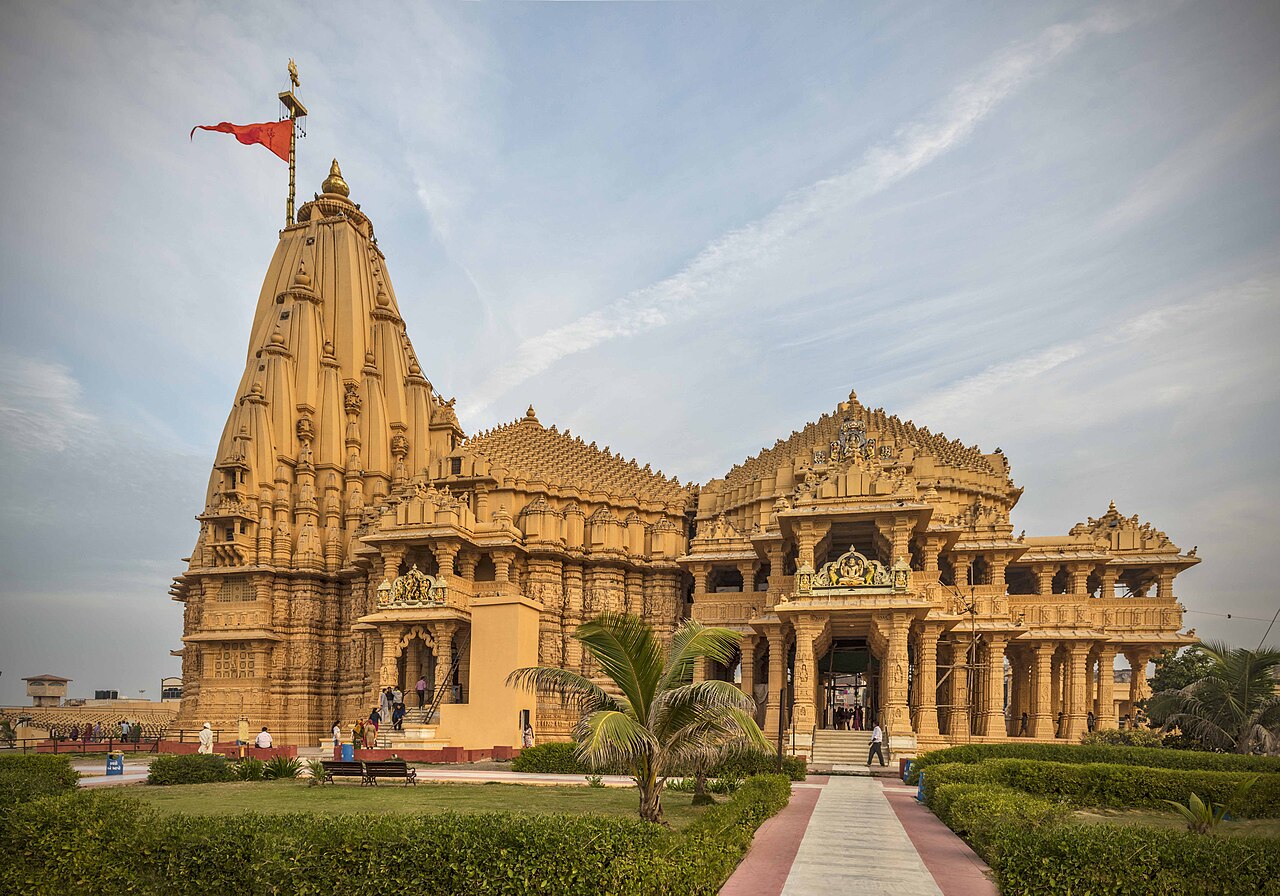
The scale of the destruction was real. Thousands of temples were demolished. The great temple at Somnath was attacked seventeen times. The universities of Nalanda and Vikramashila — repositories of centuries of Buddhist and Hindu learning — were burned. The priestly and scholarly communities that sustained the tradition were killed, dispersed, or forced into hiding in regions the invaders had not yet reached. By any standard measure of civilisational disruption, what happened to Hindu India between the eleventh and eighteenth centuries should have been fatal.
The British colonial project then attempted something more subtle but in many ways more insidious. It did not primarily seek to destroy Hindu temples — it sought to destroy Hindu confidence. The Orientalist and missionary discourse that accompanied British rule constructed a vision of Hinduism as essentially primitive, superstitious, irrational, and unworthy of modern civilised people. The Macaulayan educational project produced generations of Indians trained to see their own tradition through colonial eyes — as folklore, as social pathology, as the backward inheritance of an underdeveloped people. Caste was hardened through census operations and legal codification into a permanent stigma on the entire tradition. The tilak became a mark of the uneducated. The temple became a site of superstition. Sanskrit became a dead language studied for historical interest rather than a living medium of philosophical inquiry.
And then, after independence, came the internal pressure. The Nehruvian secularist project — shaped by genuine idealism and a real concern for the communal violence that had torn the subcontinent apart — created an intellectual and institutional culture in which Hindu religious identity was treated as a private matter to be kept firmly out of public life. The sophisticated Hindu was the secular Hindu. The educated Hindu was the one who had moved beyond the tradition. The temple was respected as heritage but not as living truth. The tradition was tolerated in the household but discouraged in the public square.
Three waves of pressure, each serious, each sustained, each aimed at different dimensions of the same tradition. And still the tradition breathes.
Why It Was Hard to Kill
The survival of Hindu civilisation is not a mystery if you understand its structure. It is, in retrospect, almost inevitable — not because the tradition was invulnerable, but because it was structured in a way that made it extraordinarily difficult to kill.
The first and most important feature is plurality. Hinduism is not one tradition. It is hundreds of traditions — Shaiva, Vaishnava, Shakta, Smarta, the innumerable regional and community-specific cults and lineages and philosophical schools — each with its own texts, its own practices, its own deity relationships, its own transmission mechanisms. To kill Hinduism, you would have to kill all of them simultaneously. Kill one and the others survive. Suppress one region and the tradition retreats to another. Destroy one set of texts and others remain. The plurality that made Hinduism look chaotic and inconsistent to outsiders trained to expect a single creed, a single scripture, a single authority — that plurality was its immune system.
"The plurality that made Hinduism look chaotic and inconsistent to outside eyes was its immune system. Kill one tradition and a hundred others survive."
The second feature is decentralisation. Hinduism has no pope, no single institutional authority whose capture would decapitate the tradition. The Brahminical learning tradition was distributed across thousands of individual teacher-student lineages, each capable of independent survival. When the great centres of learning were destroyed — Nalanda, Vikramashila, the Brahminical academies of the northwest — the tradition retreated to the south, to Kashmir, to Bengal, to the village temples of Tamil Nadu, to the forest ashrams of the Deccan. The invader could destroy what was visible. The tradition went underground and continued.
The third feature is what might be called the domestication of the sacred. In the Abrahamic traditions, the primary encounter with the divine is mediated through institutional structures — the church, the mosque, the synagogue. Destroy the institution and you have disrupted the encounter. In the Hindu tradition, the primary encounter with the divine is woven into the fabric of daily domestic life — the morning puja, the lighting of the lamp, the kitchen rituals, the naming of children, the observance of the life-cycle sacraments, the daily offering of food. These practices are performed not in institutions but in households. You cannot destroy a household practice by destroying an institution. The institution can be demolished. The household continues.
The fourth feature is the oral transmission tradition. The Vedas were preserved orally for millennia before they were committed to writing — preserved with a precision of transmission that written texts rarely achieve, through a system of memorisation and recitation that embedded the texts in the bodies and minds of the people who carried them. When texts were burned, the tradition was not lost. It was in the mouths of the people who had memorised it. The invader could burn the library. The Brahmin pandit who had memorised the library walked away and continued to teach.
The Ordinary Custodians
The histories of civilisational survival tend to focus on the exceptional figures — the philosopher kings, the saint-poets, the founders of religious orders, the scholars who preserved texts and established new centres of learning. These figures are real and their contributions are genuine. Shankara's establishment of the four dhamas, the Bhakti saints' popularisation of devotional practice in the vernacular languages, Ramanuja's philosophical systematisation of Sri Vaishnavism — these were civilisationally significant acts whose importance cannot be overstated.
But the deeper story of Hindu survival is not the story of exceptional figures. It is the story of ordinary people doing ordinary things, persistently, in the face of persistent pressure.
It is the story of the Tamil grandmother who kept the kolam going every morning at the threshold of her house — the rice flour pattern that marked the home as a sacred space, that connected the household to a tradition of practice stretching back further than memory, that she continued to draw even when the world outside her door was hostile to what it represented. Nobody asked her to do it. Nobody would have noticed if she had stopped. She did it because it was what was done — because it connected her to her mother and her mother's mother in an unbroken chain of practice that she understood, without articulating it, as something that deserved to continue.
It is the story of the village priest who maintained the daily puja in a temple that was falling apart, with no patronage, no institutional support, no certainty that anyone would come — who continued because the deity needed to be bathed and fed and honoured, because the ritual had to be performed whether or not it was convenient, because the continuity of the practice was itself the point.
It is the story of the Brahmin family in medieval Kashmir who, as the tradition was being suppressed, made the decision to memorise and transmit the texts anyway — who understood, without necessarily framing it in these terms, that they were custodians of something that did not belong to them, that had been entrusted to them by the dead and that they owed to the unborn.
It is the story of the farmer's wife in colonial Bengal who continued to perform the rituals her colonial-educated husband had been trained to be embarrassed about — who maintained the tradition not through defiance but through the simple refusal to accept that it deserved to be abandoned, who understood in her bones what the coloniser's education had taught her husband to doubt.
"Civilisations are not preserved by kings and philosophers alone. They are preserved by grandmothers. By the woman who lights the lamp. By the man who will not stop saying the names."
Civilisations are not preserved by kings and philosophers alone. They are preserved by grandmothers. By the woman who lights the lamp every evening without fail. By the man who will not stop saying the names of his gods regardless of what the educated world thinks of him. By the parent who teaches the sloka to the child before bed. By the community that maintains the temple festival even when money is scarce and attendance is declining and the younger generation has moved to the city.
These people are the real reason Hindu civilisation survived. Not because they were heroes — they would not have described themselves as heroes. Because they were faithful. Because they kept doing what needed to be done. Because they understood, without perhaps being able to articulate it philosophically, that the thread they were holding had been held before them by an unbroken chain of hands reaching back beyond memory, and that their job was simply to hold it and pass it on.
The Cost of Survival
It would be dishonest to celebrate this survival without acknowledging what it cost.
The medieval centuries cost lives — of priests killed protecting their temples, of scholars who died rather than convert, of communities disrupted and dispersed, of texts burned that we will never recover, of traditions suppressed so thoroughly that they left only faint traces in the archaeological record. The survival was not painless. The invaders did real damage, and some of what was lost will never be recovered.
The colonial centuries cost something different — they cost confidence. The sustained colonial discourse of Hindu primitiveness and superstition produced real damage to the self-understanding of educated Hindus. The Brahmin who apologised for his tilak, the Hindu who explained that Hinduism was really monotheistic, the Indian who treated his own tradition as folklore while treating Western philosophy as serious knowledge — these were the casualties of the colonial project's most successful operation, the one that did not require violence because it worked through shame.
And the modernist secular decades cost continuity. The grandmother who practised was not always succeeded by a daughter who understood what she was practising and why. The gap between the practising grandparent and the secular grandchild — a gap produced not by hostility but by aspiration, by the genuine desire to be modern and educated and successful in a world that defined those things in ways that excluded traditional Hindu identity — that gap is where much of the transmission broke down.
The tradition survived. But it survived damaged, in places hollow, in places carrying practices whose meaning had been lost while the form was maintained, in places maintaining a form of identity that had been so thoroughly shaped by its apologetic encounter with outside criticism that it had forgotten what it actually was.
What Survival Means Now
The tradition was kept for you. This is the most important thing to understand about what Hindu civilisational survival means for a Hindu alive today.
It was not kept easily. It was not kept automatically. It was kept by specific people, in specific places, at specific costs, making specific choices — often choices that were not obviously sensible by the standards of the world they were living in. The grandmother who kept the kolam when it was socially inconvenient. The priest who maintained the temple when there was no money. The scholar who preserved the texts when preservation was dangerous. The community that maintained the festival when everything encouraged abandonment.
They kept it for you. The thread was held so that it could be placed in your hands. And now it is in your hands, and the question is what you will do with it.
This is not a guilt trip. Guilt is not the appropriate response to inheritance. The appropriate response is something closer to what you feel when you receive a gift from someone who made real sacrifices to give it — a combination of gratitude, responsibility, and the understanding that the gift carries an obligation not to waste it.
The gods that survived the medieval iconoclasts, the colonial missionaries, the modernist secularists, and the evangelical demonisers of Frisco, Texas — they survived because ordinary people made the ordinary decision, day after day, to keep doing what needed to be done. To light the lamp. To say the names. To teach the children. To maintain the practice even when the practice was inconvenient, unfashionable, socially costly, or simply hard.
That is all that is being asked of you. Not heroism. Not philosophy. Not political activism. Just the ordinary faithfulness that kept the tradition alive through conditions far more hostile than anything you are likely to face.
The gods survived Mahmud of Ghazni. They survived Aurangzeb. They survived Macaulay. They survived the census operations and the missionary schools and the Nehruvian contempt and the evangelical demonisers. They are not fragile. They do not need your protection. They need your practice.
Light the lamp. Say the names. Teach the children. The thread has been held for three thousand years. Hold it. Pass it on.
The gods they couldn't kill are waiting. Not in museums. Not in textbooks. In your home, at your threshold, in the names your grandmother taught you. They survived everything. Do not let them die of neglect.
